
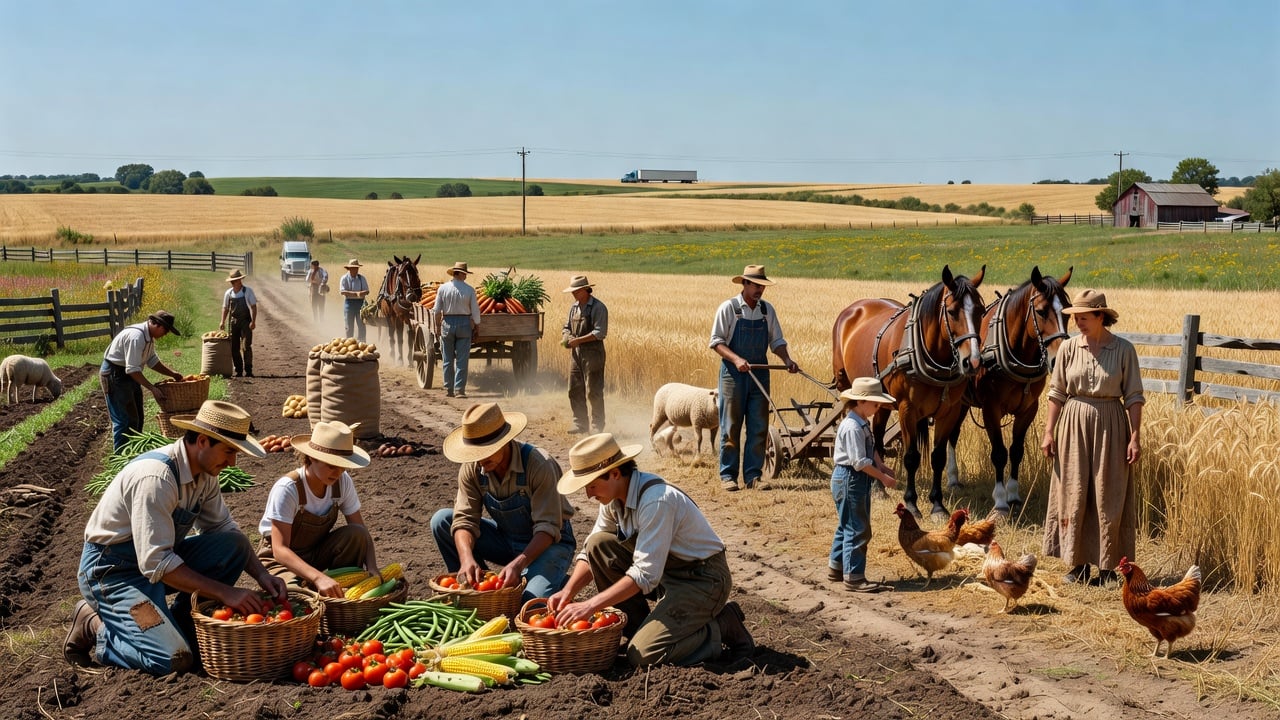
Long ago, Americans grew their own food on farms that shaped their lives and communities. Today we import most of it instead. This foreword explains why food emancipation is vital to regain that lost freedom.
Agronomy, a term not often heard today, played a key role in American life from before the nation's founding through the early Progressive Era. People had direct contact with the soil and learned from every part of farm work. This way of living helped them provide food for their own families as well as for neighbors and local communities across the country.
Daily life on the farm built strong character and close community ties. It was the main way people sustained themselves and stayed independent. The experience with growing crops and raising animals shaped how Americans viewed the world and their place in it for many generations.
Now things are different as the country imports most of its food from far away places. This change has weakened the old connection to the land and local production. Jeffrey A. Tucker's foreword to Joe Salatin's book Food Emancipation explores the reasons behind this loss and makes a strong case for taking back control over our food sources to rebuild healthy and free communities.
Original Author: Jeffrey A. Tucker | Source: Brownstone Institute

 588.013 SRY